Plaque vs. Tartar: Why the Back of Your Teeth Feel Rough
Have you ever run your tongue along the back surface of your lower front teeth and felt a rough, gritty, or sandpaper-like texture? Even after brushing thoroughly, that chalky feeling remains stubbornly attached to the enamel.
This familiar sensation is not an illusion—it is physical evidence of the biological transition from soft dental plaque into hardened dental calculus, commonly known as tartar.
While many patients assume a rough tooth simply needs harder scrubbing with a stiff toothbrush, the reality is biologically quite different. Understanding how plaque transforms into tartar—and why hardened buildup cannot be brushed away at home—is the key to protecting your teeth from gum recession and bone loss.
The Biological Progression: From Plaque to Tartar
Although plaque and tartar are related stages of the same underlying oral process, their physical properties and treatment methods are entirely distinct:
1. Dental Plaque: The Soft Biofilm
Dental plaque is a soft, sticky, virtually colorless film of bacteria, salivary glycoproteins, and microscopic food sugars that forms on your teeth 24 hours a day. Every time you eat or drink, bacteria in this biofilm feed on sugars, producing weak acids that can demineralize outer enamel.
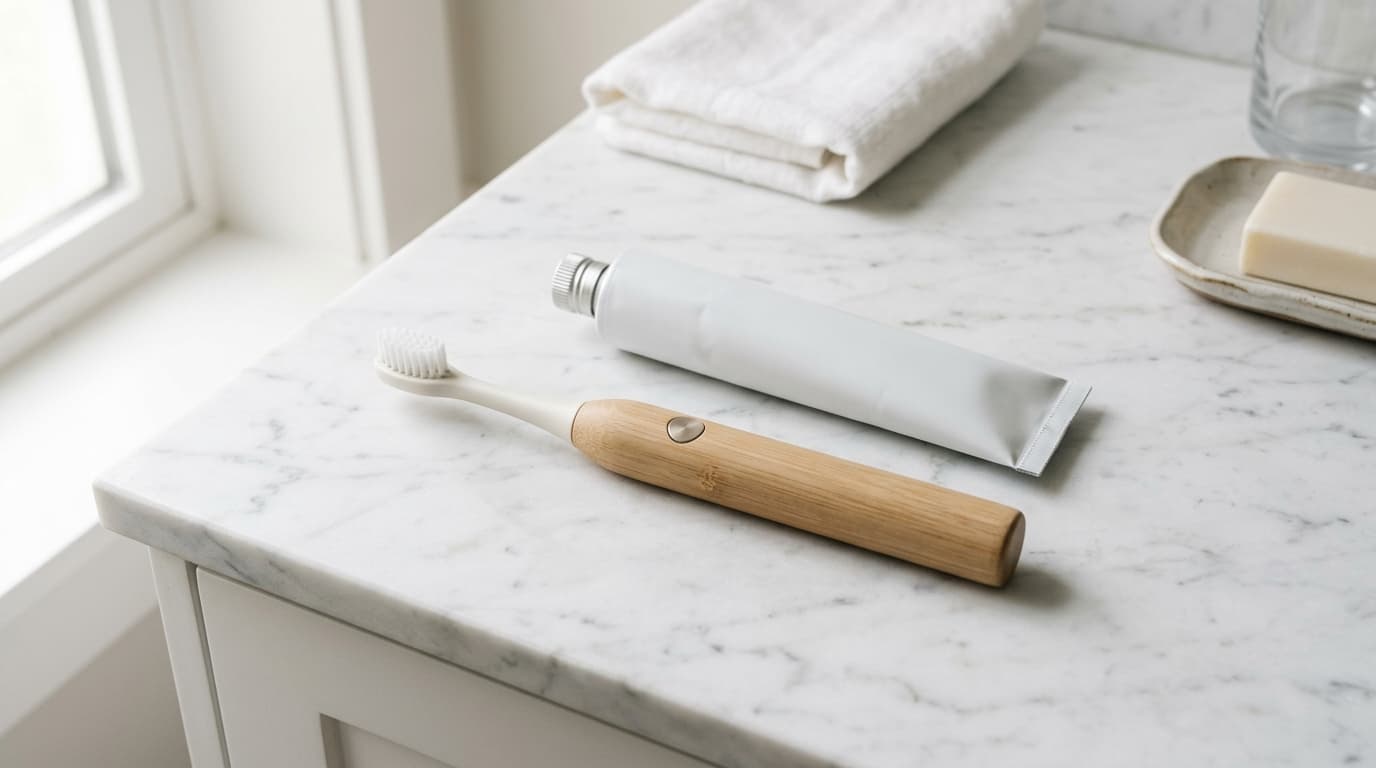
Because plaque is soft and non-calcified, it can be thoroughly disrupted and removed with daily home care: brushing twice daily for two minutes and cleaning between teeth with dental floss.
2. Dental Tartar (Calculus): The Hardened Mineral Deposit
When soft bacterial plaque is left undisturbed on the tooth surface for as little as 24 to 72 hours, it absorbs calcium and phosphate minerals dissolved in your saliva. This chemical reaction causes the soft biofilm to calcify and petrify into hardened dental calculus (tartar).
Once tartar forms, it bonds chemically to the micro-porosities of your enamel and root surfaces. Tartar has a rough, porous, stone-like texture that:
- Cannot be removed with a toothbrush, dental floss, or mouthwash.
- Acts as a rough Velcro-like scaffold, making it much easier for fresh bacterial plaque to adhere and multiply on top of it.
- Absorbs pigments from coffee, tea, and food, turning from pale yellow to dark brown or black over time.
Why Does Tartar Build Up Most Behind the Lower Front Teeth?
If you inspect your own mouth, you will likely notice that tartar accumulates most heavily on the lingual (tongue-facing) side of your lower incisors and on the cheek-facing side of your upper molars.
This is not a coincidence—it is anatomical. The primary ducts of your major salivary glands exit right next to these exact teeth:
- The Wharton's ducts from the submandibular and sublingual glands empty directly beneath your tongue, constantly washing the lingual surfaces of your lower front teeth with saliva.
- While saliva is your mouth's natural defense against acid erosion, its high concentration of dissolved calcium and phosphate creates a local micro-environment where bacterial plaque mineralizes into calculus at an accelerated pace.
The Dangers of DIY Tartar Removal Kits
In recent years, internet marketplaces and social media have popularized at-home "dental scaling tool kits"—metal scrapers, curettes, and battery-powered ultrasonic vibration wands sold directly to consumers.
Dental professionals strongly advise against using these tools at home:
- Permanent Enamel Gouging: Dental enamel is extremely thin near the gumline. Without specialized tactile training, proper indirect mirror visibility, and precise angulation, metal scrapers gouge and scratch the protective enamel layer. These scratches create permanent microscopic grooves where plaque accumulates even faster.
- Severe Gum Laceration and Recession: Gums are delicate tissues attached to the tooth by microscopic hemidesmosomes. Slipping with a sharp metal tool lacerates the gingiva, causing painful bleeding and irreversible gum recession.
- Bacterial Inoculation: Pushing unsterilized tools beneath the gumline forces surface bacteria deep into the periodontal pocket, triggering painful acute abscesses.
- Abrasive Home Remedies: Pastes made from baking soda, lemon juice, or activated charcoal cannot dissolve calcified calculus. Instead, their high abrasiveness and acidity strip away healthy enamel, leading to acute tooth sensitivity.
The Clinical Health Risks of Ignoring Tartar
Tartar is not purely a cosmetic issue. Because it is porous, it harbors billions of active living bacteria right against the vulnerable gum margin:
- Gingivitis (Reversible Inflammation): Bacteria release endotoxins that irritate gum tissue, causing redness, swelling, and bleeding during routine brushing. Learn how to identify early symptoms on our bleeding gums guide.
- Periodontitis (Irreversible Bone Destruction): If calculus remains beneath the gumline, chronic inflammation destroys the underlying alveolar bone and periodontal ligament. As bone recedes, gums pull away from teeth, forming deep periodontal pockets. Over years, this structural loss causes teeth to loosen and eventually fall out.
Professional Ultrasonic Scaling: The Safe Solution
The only safe and clinically validated way to eliminate hardened tartar is through professional prophylaxis with an ultrasonic scaler.
At Dental Sphere in Nagavara, our preventive cleanings are designed for comfort and precision:
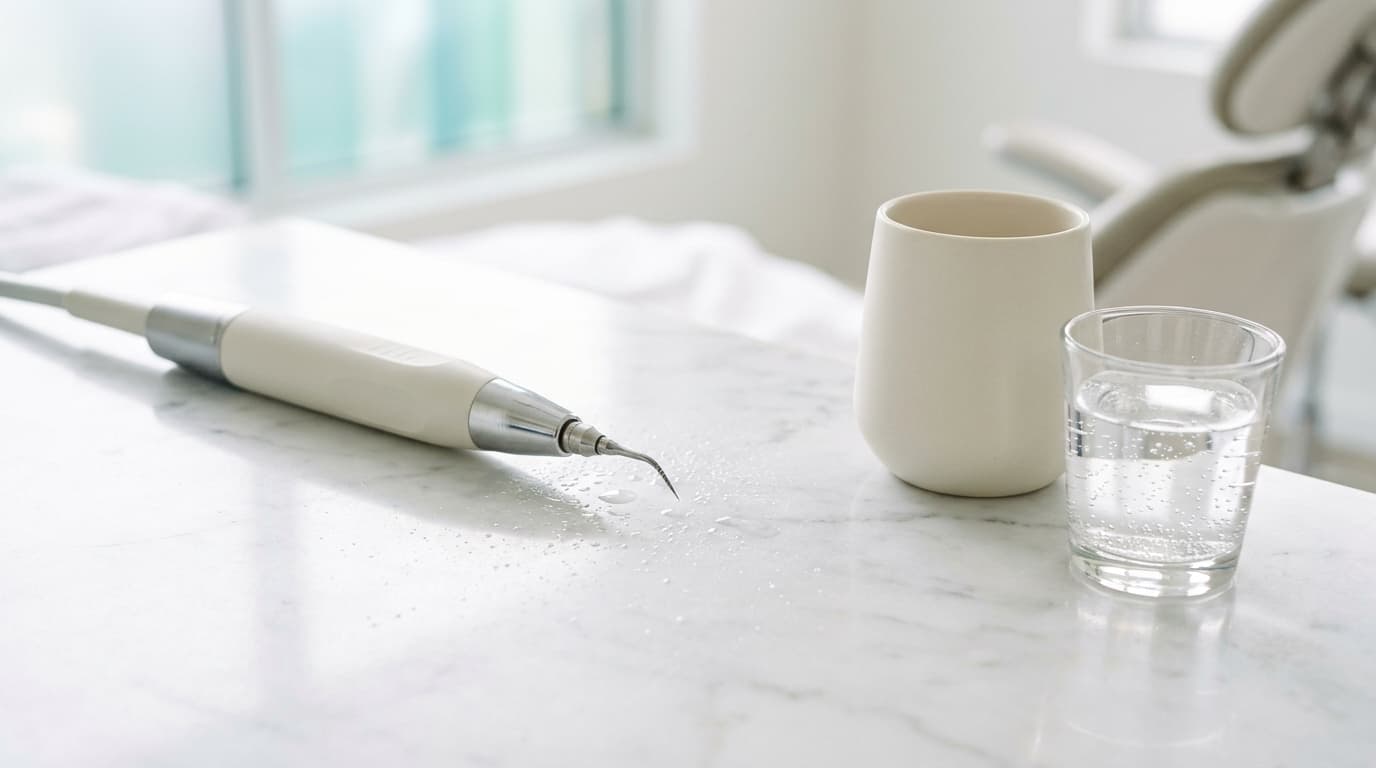
- High-Frequency Micro-Vibrations (28–32 kHz): Piezoelectric ultrasonic tips vibrate thousands of times per second. These microscopic oscillations gently shatter and dislodge calculus deposits without scraping, cutting, or scratching the underlying enamel.
- Hydrodynamic Cavitation: A cool water spray flushes away debris while microscopic shockwaves disrupt bacterial cell walls and flush out periodontal pockets.
- Class-B Autoclave Sterility: Every clinical handpiece and scaling tip undergoes medical-grade vacuum sterilization to ensure complete patient safety.
- Gentle Air-Flow Polishing: After scaling, gentle glycine polishing smooths the enamel surface, eliminating surface tea and coffee stains so teeth feel completely clean and glass-smooth again.
How to Keep Your Teeth Smooth Between Cleanings
- Brush Twice Daily for 2 Minutes: Use a soft-bristled toothbrush angled at 45 degrees toward the gumline.
- Floss Daily: Clean between tight contact points where a toothbrush cannot reach.
- Schedule 6-Month Preventive Checkups: Even with diligent home hygiene, small amounts of calculus inevitably form near salivary ducts. Routine bi-annual cleanings ensure buildup is gently removed before it compromises gum health.
Learn more about our preventive care protocols on our dedicated teeth cleaning and scaling service page or contact our Nagavara clinic to schedule your next checkup.
Discuss Your Dental Health with Dr. Arshiya Zakreen
Have questions about this condition or need an accurate clinical evaluation? Visit our clinic in Nagavara, Bengaluru (5 mins from Manyata Tech Park).